© C. Labonté
© C. Labonté
© With Axie
© C. Labonté

© M. Baril Tessier
© C. Labonté
© M. Chick
Discover the history of the Outaouais along its waterways. These capsules feature iconic figures, from Philemon Wright to Jos Montferrand, as well as places that have shaped the region, such as the Museum of History, Parc Aventure des Chutes Coulonge, and the Manoir-Papineau. From the early 19th century to today, they provide a vivid glimpse into the cultural, historical, and natural heritage of the Outaouais.
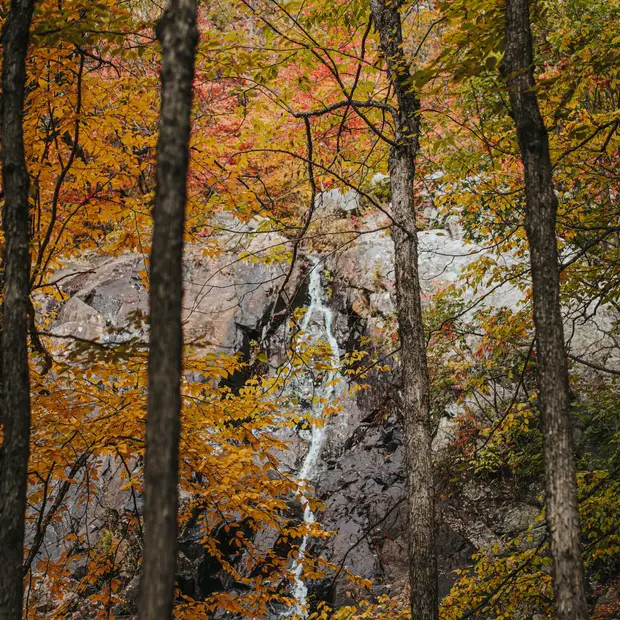
Luskville Falls is located in the western part of Gatineau Park, in the municipality of Pontiac, on the slope of the Eardley Escarpment. The waterfall was formed about 12,000 years ago, when the glaciers that covered the region retreated and created a break in the rock formation. The smooth terrain and the rounded shape of the rocks are also evidence of this erosion.
The site offers a 4.2-km loop trail with a 300-metre elevation gain. There are two lookouts, Pontiac and Lusk, the former named in honour of Chief Pontiac of the Ottawa Nation and the latter after Joseph Lusk, a successful Irish pioneer in the area. The Luskville Falls site is a unique and fragile ecological environment, home to several endangered species including the peregrine falcon.
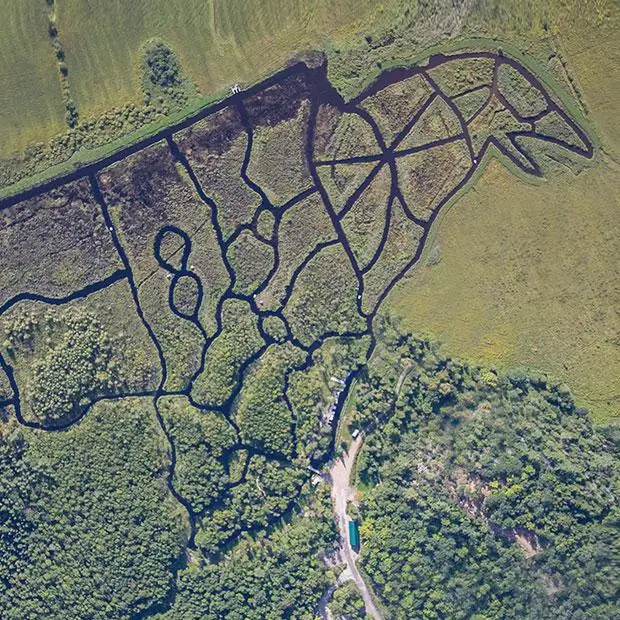
In 1997, Michel Leclair, a former wildlife conservation officer for Gatineau Park, acquired a large piece of land in Wakefield that included a 70-acre marsh. His goal was to establish a vast water maze resembling a beaver’s network of underwater channels. A true enthusiast of this emblematic Canadian species, he wanted to pass on his knowledge of the animal and its habitat.
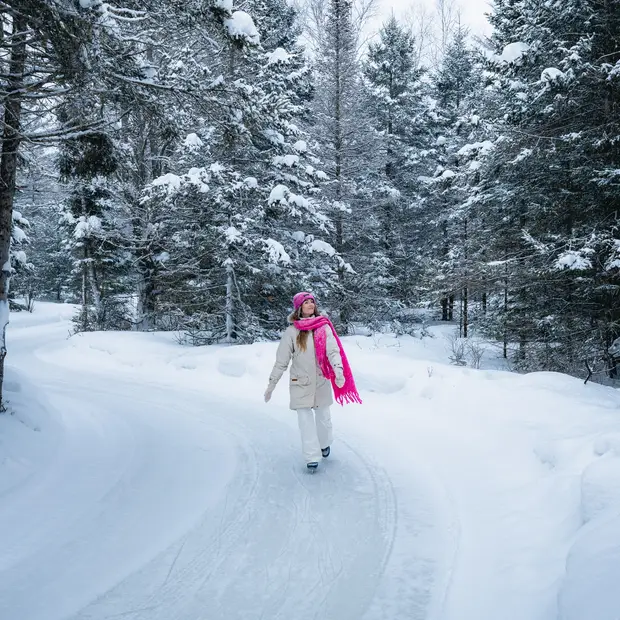
The work took five years, and Eco-Odyssée Nature Park opened in 2007. In a pedal boat or canoe or on a paddle board, visitors can navigate a 6.4-km water labyrinth with 64 intersections. Prior to their excursion, visitors receive material designed to help develop their knowledge of nature and the environment. In winter, the frozen labyrinth is open for skating.
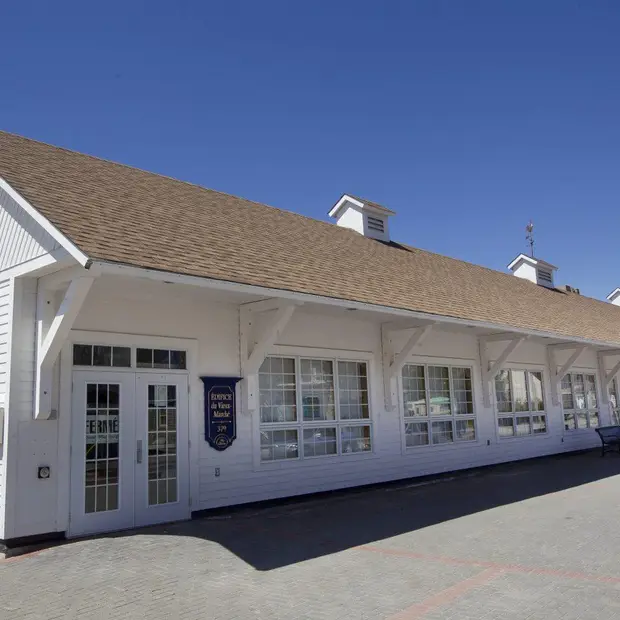
Established in 1993, the Buckingham Historical Society is a non-profit organization that promotes and preserves the tangible and intangible heritage of Buckingham and the Lower Lièvre region. Located in the Old Market building, the Historical Society opened its permanent exhibition, Buckingham, a City of Energy, in 2013. The exhibition focuses on the forestry and mining industries, sectors that have contributed to the city’s economic growth, and profiles residents and important figures in Buckingham’s history. The exhibition features interactive tablets and an educational self-guided tour for youth. Periodically, the Buckingham Historical Society organizes guided tours, workshops and conferences.

Opened in 1991, Parc Omega distinguishes itself from traditional zoos by its natural setting of more than 810 hectares (2,000 acres) inhabited by several iconic animal species native to Quebec. In their vehicles, visitors can drive along a 12-km trail network and observe various animals, including elk, bison, wolves, bears and wild boars, in their natural habitat. Feeding carrots to the deer is a popular activity! The park is open year round, and each season offers visitors a unique experience.
A special trail dedicated to Quebec’s First Nations highlights their contribution to the province’s history and heritage. On-site attractions also include other natural features, presentations and demonstrations, and a range of unique overnight accommodation.
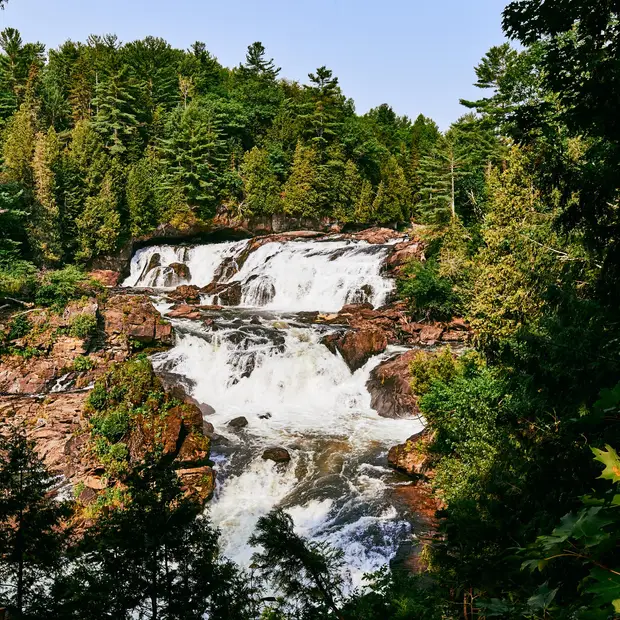
Founded in 1990, Patrimoine et Chutes de Plaisance (Plaisance Heritage and Falls) is a non-profit organization with a heritage, cultural and recreational mission. It manages the Falls’ natural site, which includes a historical pavilion, a lookout and rest areas with picnic tables. Visitors can also follow the one-kilometre walking trail to the base of the falls.
Interpretation panels on the site present the history of the area and the decisive economic role it played in the 19th century. With its 63-metre elevation gain, Plaisance Falls favoured the development of the former industrial village of North Nation Mills, since disappeared. The site is accessible by car and bicycle, and dogs on leashes are allowed.
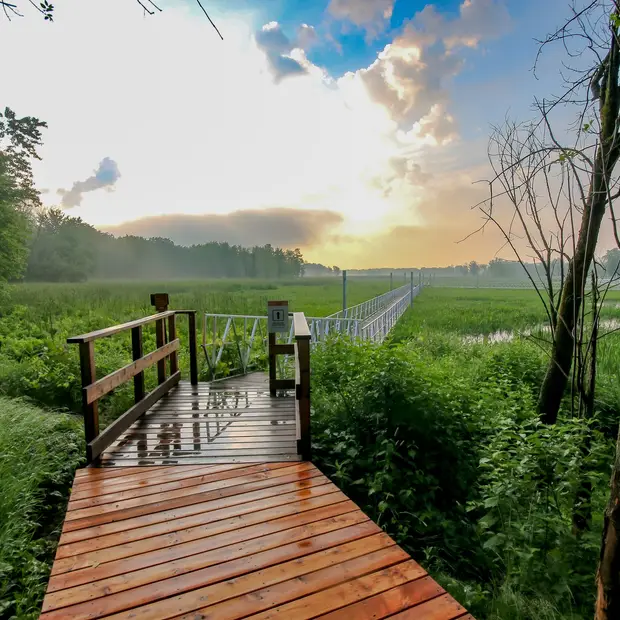
Covering an area of 28 km2, Parc national de Plaisance is located on the former property of Louis-Joseph Papineau, owner of the Petite-Nation seigneury in the early 19th century. Highly fertile, the land was then used for agriculture. In 1963, the activation of the Carillon Dam in the Laurentians raised the level of the Ottawa River, and marshy areas appeared in Plaisance. In 1978, this new ecosystem became a wildlife reserve, and in 2002, it was designated a national park.
Today, visitors can explore Parc national de Plaisance by way of walking trails, bicycle paths, and canoe and kayak routes. The park is home to a wide variety of flora and fauna, and the Discovery and Service Centre houses a permanent exhibition on the park’s natural and human riches.
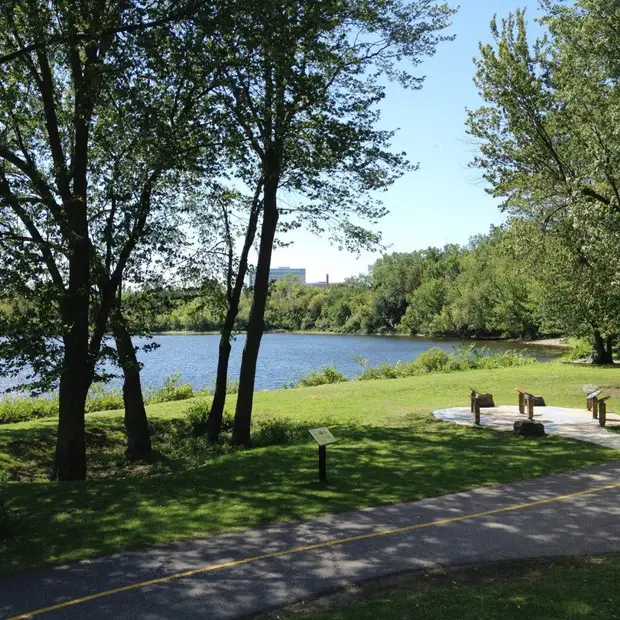
On foot, by bicycle or by car, Leamy Lake Park is accessible from Fournier Boulevard via the Leamy Lake Parkway. Created in 1961 and bounded by the Ottawa and Gatineau rivers, the park has an area of 174 hectares. The site has a beach, picnic areas with barbecues, a playground and a sport and recreational equipment rental centre.
Archaeological digs carried out in Leamy Lake Park revealed human occupation dating back more than 5,000 years. During the summer, First Nations peoples used the area as a meeting place. Objects such as stone and copper tools, pottery shards and remains of animal bones were found. The largest urban park in the region, Leamy Lake Park is a true oasis in the heart of the city.
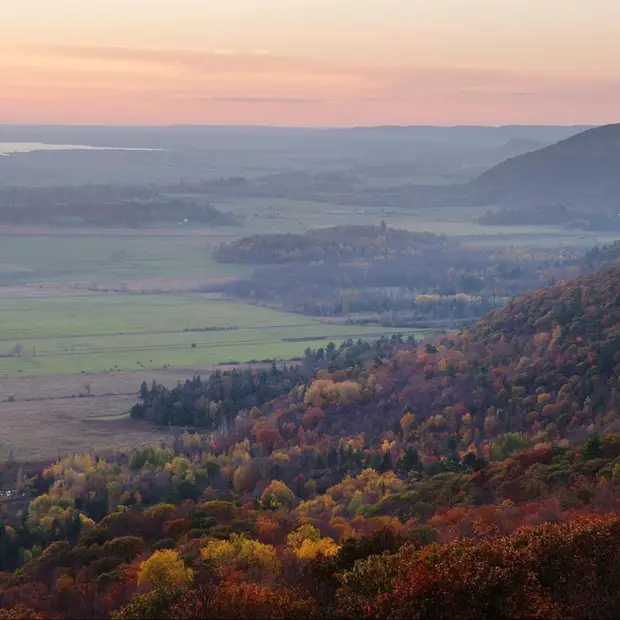
The Champlain Lookout is located in Gatineau Park at the summit of the Eardley Escarpment. Standing 335 metres above sea level, it offers a panoramic view of the Ottawa River and the boundary between the Canadian Shield and the St. Lawrence Lowlands. Inhabited by Indigenous populations for centuries, the area saw the arrival of the first European settlers in the early 19th century to exploit the land.
The park is home to a rich and diverse variety of flora and fauna, including 50 species of mammals, 230 types of birds, nearly 1,000 varieties of plants and 50 species of trees. Visitors can use the park’s many trails, and some areas (including the Champlain Lookout) are accessible by car. Gatineau Park was founded in 1938 by the National Capital Commission, which oversees its management and protection.
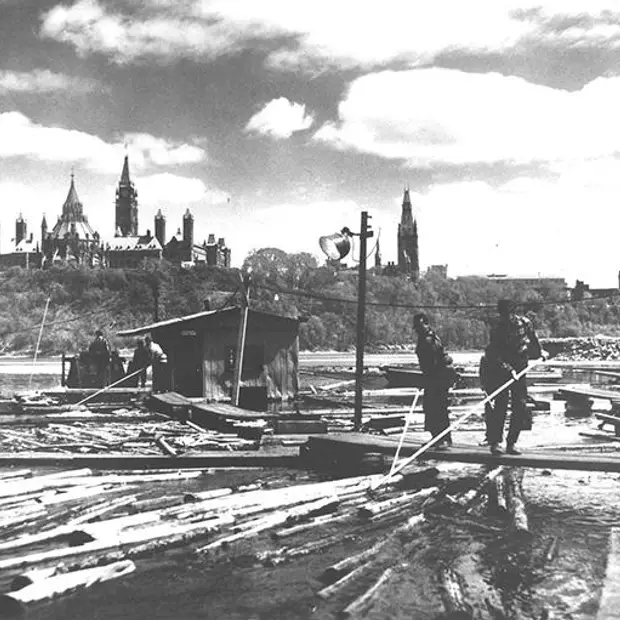
The site of Jacques-Cartier Park was originally a portage and resting spot used by Indigenous peoples and settlers wishing to cross Chaudière Falls. The area was later transformed into an industrial zone, and it wasn’t until the 1930s that it was converted into a park. Stretching along the shore of the Ottawa River and traversed by the Voyageurs Pathway, Jacques-Cartier Park offers a fantastic view of Parliament Hill.
The park contains two buildings that bear witness to Hull’s early history. Facing the river, the Charron House is the oldest residence in Hull. It was built in 1827 by François Charron on a plot of land belonging to Philemon Wright. At the north end of the park, you can see the former office of Gilmour and Hughson Limited, a remnant of this great 19th-century lumber company.
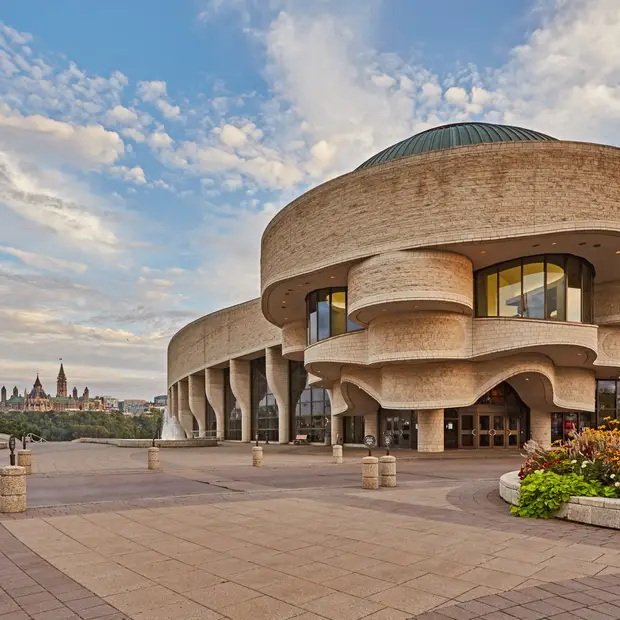
The origins of the Canadian Museum of History date back to the mid-19th century and the first provincial geological survey. The Geological Survey of Canada, established for this purpose, collected archaeological, biological and geological samples from across the country, thus assembling the first collection. In 1927, the Geological Survey of Canada became the National Museum of Canada. After several changes of name and location, the current museum was inaugurated in 1989 in Hull. The building was designed by Indigenous architect Douglas Cardinal and is inspired by the shapes of the Canadian landscape. It opened as the Canadian Museum of Civilization, and in 2013 it was renamed the Canadian Museum of History.
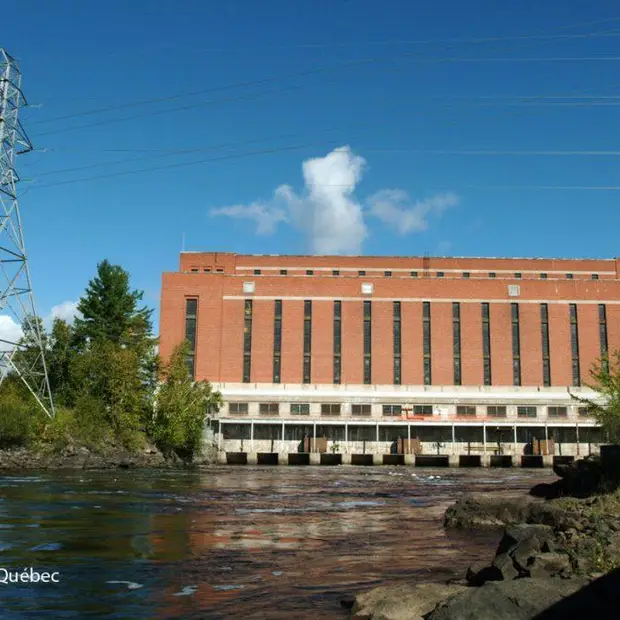
In 1926, the Canadian International Paper Co (CIP) commissioned the Gatineau Power Company to build and operate an electric plant to power its new mill. Built on the Gatineau River, 2 km upstream from the Alonzo Wright Bridge, the Rapides-Farmer power plant began operating in 1927. Initially intended to supply the CIP mill and to produce electricity for Ontario, the building was bought by Hydro-Quebec in 1963. Originally, the power plant included a long log chute so that logs coming down the Gatineau River could bypass the plant.
Every summer since 1994, the Rapides-Farmer power plant has welcomed the public to a small interpretation centre and offered free guided tours of the site. Among other attractions, visitors can observe a 160-ton rotor in action.
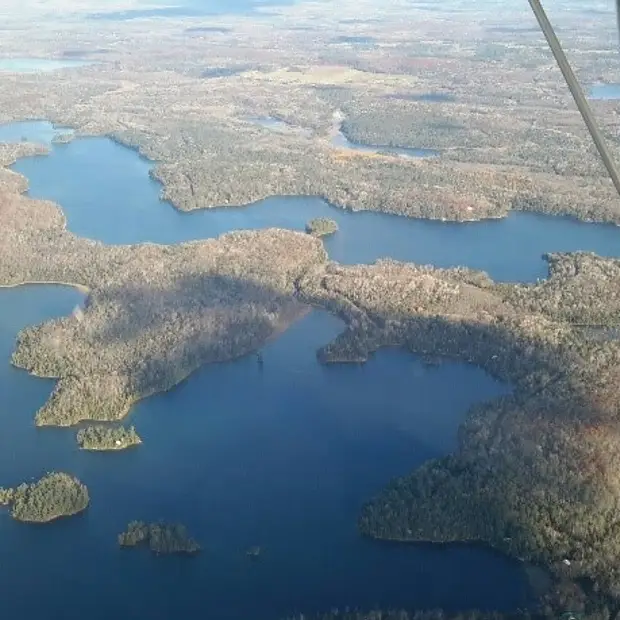
Born in 1905, Lucienne Bourgeois dedicated much of her life to helping those in need. Notably, she helped establish the Cercles de fermières, which became the Union catholique des femmes (UCF) in 1949. She was also involved in setting up the Association féminine d’éducation et d’action sociale (Afeas) in Gatineau’s Sainte-Rose-de-Lima parish. In 1950, she became the founding president of the parish’s Lacordaire and Jeanne-d’Arc circles. Her commitment continued in 1973 when she launched Gatineau’s Meals on Wheels, a meal delivery service allowing people with physical and cognitive disabilities to stay in their own homes.
In May 1985, Pope John Paul II awarded her the Benemerenti Medal in recognition of her service to the Gatineau community.
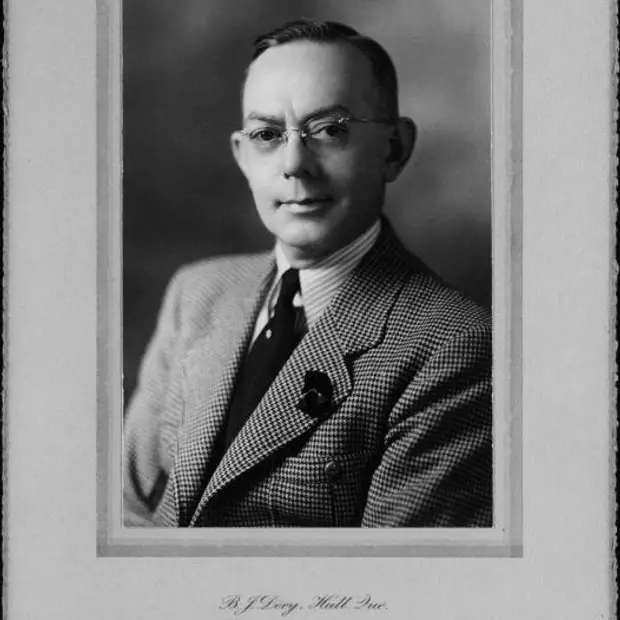
Alphonse Moussette was born in Aylmer in 1892. He was the son of Antoine Moussette, the governor of the Hull prison from 1890 to 1917. Very versatile, Alphonse held various positions during his career: besides his two terms as mayor of Hull, he served as a Superior Court bailiff and as chief inspector of the county’s Liquor Board.
In addition to politics, Moussette was involved in the entertainment business. In 1909, he became co-owner of the Uniqueoscope cinema, which he later renamed the Eldorado, and subsequently bought the Avalon, a popular nightclub at the time. In the early 1940s, he was accused of protecting gambling and pleasure houses and obstructing the police. Despite this, Moussette was re-elected mayor in 1948. Moussette Boulevard in Gatineau’s Hull sector is named after him.
Learn more about this historical figure by clicking this button.
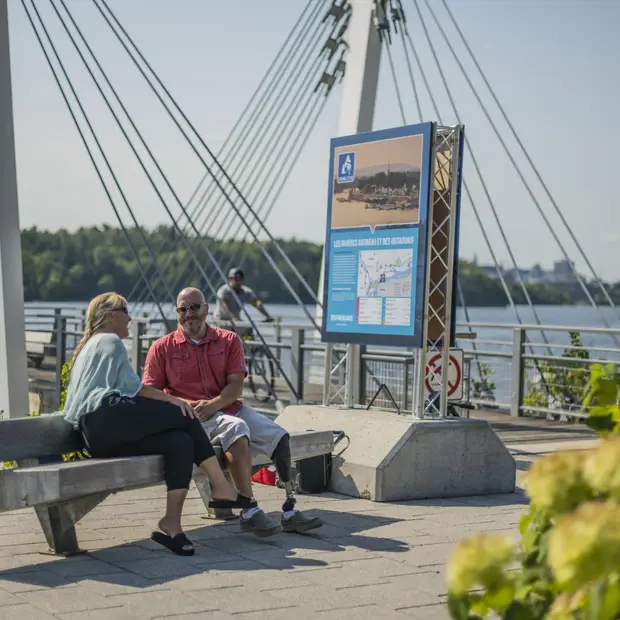
Originally known as Long Point Range, the village of Pointe-Gatineau was officially incorporated in 1876, one year after the City of Hull. The history of the area is closely linked to the forest industry, logging and raftsmen. It was that industry that prompted many families to settle along the river, hence the existence of many workmen’s dwellings, known as “matchstick houses” or “Hull-style houses”, on Jacques-Cartier Street.
In 2016, a 3.2-km stretch of Jacques-Cartier Street underwent major redevelopment. Carried out jointly by the City of Gatineau and the National Capital Commission, the project comprises a bicycle path, lookouts and nautical stops. As well, the trail is lined with a series of interpretation panels on the area’s history.
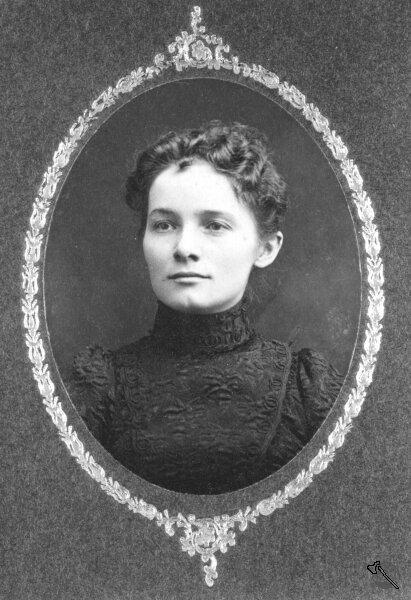
Ada Almira Brown naît en 1874 au sein de la troisième génération d’agriculteurs qui travaille la terre de la ferme familiale à Cantley. Élève émérite à l’école du village, elle devient une correspondante du Ottawa Citizen Evening pour la Vallée-de-la-Gatineau à l’âge de 14 ans. Elle transmet son savoir agricole à travers ses textes, mais partage également des observations plus étendues, notamment sur Ottawa. Entre 1895 et 1907, elle est rémunérée pour ses écrits, en plus de recevoir un abonnement au Ottawa Citizen, un bloc de papier jaune pour prendre des notes et une rétribution de trente dollars par année.
En 1905, Ada Almira Brown épouse Charles Howard Reid et part vivre à Kirk’s Ferry. Elle y élève cinq enfants et y reste jusqu’à la fin de ses jours en 1948.
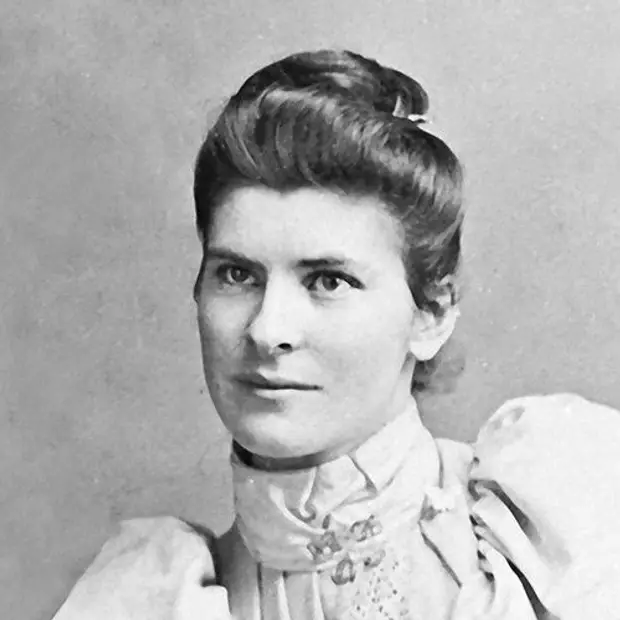
Née en 1870, Alice Cross Wilson est propriétaire de l’hôtel Peerless avec son mari Samuel Wilson. L’édifice en briques de quatre étages et de trente chambres est construit en 1890 à Cascades et accueille notamment les draveurs et les travailleurs du barrage de Chelsea. Le bâtiment abrite également le bureau de poste du village, le central téléphonique ainsi que le magasin général. Alice Cross Wilson y élève ses dix enfants, tout en prenant soin de sa mère et de son grand-père. Très engagée dans sa communauté, elle tient diverses activités sociales, dont des collectes de fonds lors de la Première Guerre mondiale. Elle joue de l’orgue pendant plus de quarante ans aux offices de l’Église anglicane et de l’Église Unie.
L’hôtel Peerless ferme ses portes en 1927 à la suite de l’inondation de la rivière Gatineau par le barrage de Chelsea.
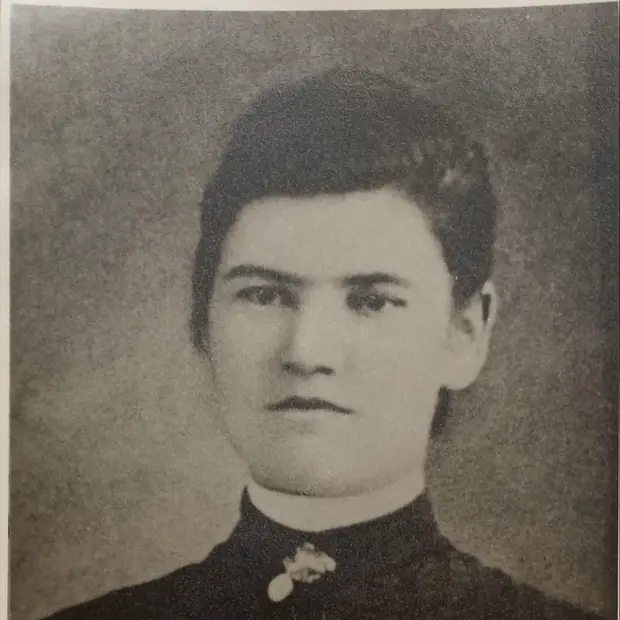
Éléonore Potvin was born on January 4, 1865, into a farming family in Angers. A devout believer, she wanted to enter religious orders at the age of 24 but was unable to do so because of her frail health. In 1890, Father Alexis-Louis Mangin hired her as a housekeeper and sacristan in the parish of Masson. Two years later, she became the first member of the Third Order of Saint Francis.
In 1895, Éléonore Potvin and Father Mangin founded the Congregation of the Servants of Jesus and Mary, a community dedicated to prayer and perpetual adoration of the Most Blessed Sacrament. Éléonore Potvin was then chosen to lead the community and was given the name of Mother Marie Zita de Jésus.
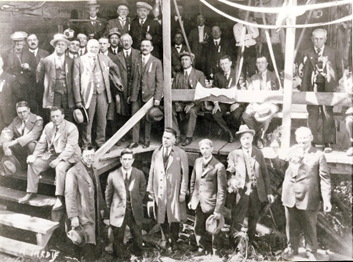
The largest visited cave in the Canadian Shield, the Laflèche Cave was discovered in 1865 by the coureur des bois Joseph-Charles Dubois. It was formed more than 12,000 years ago when melting glaciers dissolved the limestone of the sedimentary rocks, thus carving out the cave and some underground lakes. Its chambers display nearly 20,000 years of geological history.
Until the 1950s, the site belonged to a company whose main shareholder, Zéphyr Laflèche, named the cave after himself. After being abandoned for several years, the site was reclaimed by the municipality, which opened it to the public in 1995. Ten years later, an aerial park was built on the site. Today, the cave is part of Arbraska Laflèche Park, an outdoor recreation centre offering guided tours of the cave, treetop courses, ziplines and rallies.
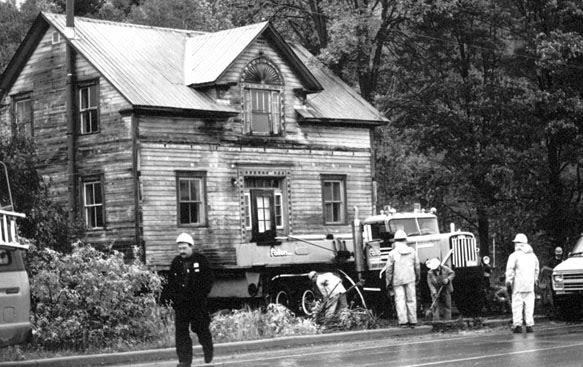
Fairbairn House, one of Wakefield’s oldest buildings, was built in the early 1860s by William Fairbairn, a Scottish-born mason. He arrived in the area in 1834 and was the first to set up a grist mill, near the La Pêche River; the mill’s stone walls are still visible today.
Threatened with destruction on two occasions because of road construction and housing development, Fairbairn House was moved in 2005 to its current permanent location in Hendrick Park, not far from the Wakefield Covered Bridge. In 2012, the Fairbairn House Heritage Centre opened to the public. Visitors can take part in activities, watch demonstrations of period handicraft techniques, and tour a small old-fashioned schoolhouse as well as the main house, where there is an exhibit on the area’s history and founding families.
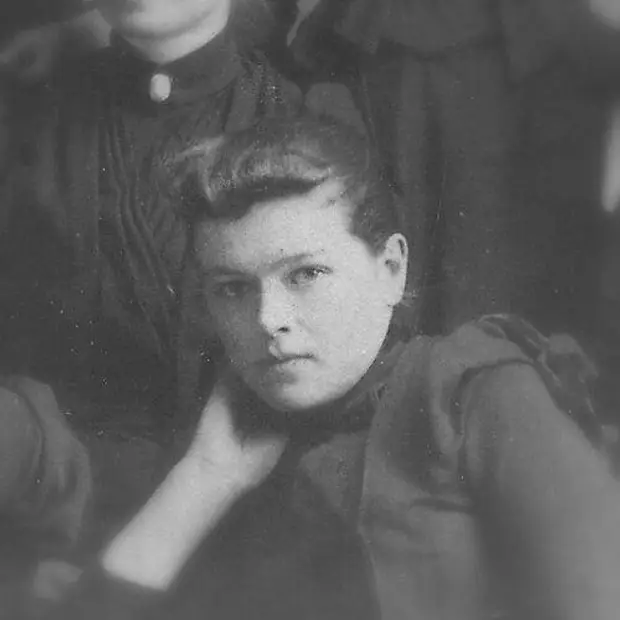
Born on August 25, 1855, Lucy Faris was one of the eleven children of John Faris and Mary Benedict, a pioneer couple living in Aylmer. A passionate reader from an early age, she vowed to create an institution allowing the citizens of her community to access reading and education. After a lifetime spent in her home town, she left a fund in her name on her death in 1924. The money was used to establish Aylmer’s first library, opened in 1938; its collection included 220 books donated by Lucy Faris.
In May 2004, to honour her memory, the City of Gatineau named a new library after her. It occupies two floors of the Place des Pionniers building in Gatineau’s Aylmer sector.
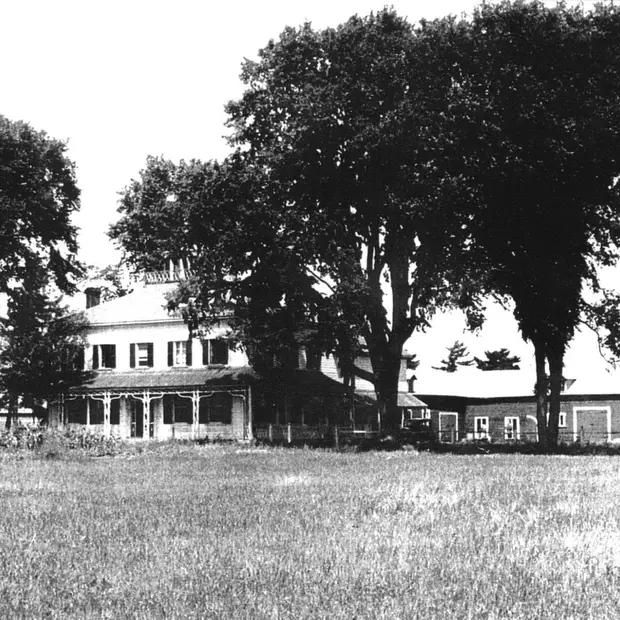
Originally from Scotland, George Bryson settled in the Pontiac in the late 1830s to establish a logging business. In 1843, he set up a sawmill and built a log slide on the Chutes Coulonge for the transportation of wood. A true businessman, he dominated the Pontiac logging market and played an active part in its economic expansion.
In 1854, George Bryson built an exquisite house on the banks of the Coulonge River, similar to those built by Scottish merchants in the early 19th century. The house remained in the Bryson family until 1942, after which it fell into disuse and neglect. In the 1970s, a group of enthusiastic Pontiac citizens took steps to save the building, and in 1980 it was designated a historic monument by the Quebec Ministry of Culture and Communications. Today, George Bryson House is home to a museum dedicated to the history of the Pontiac and the Bryson family.
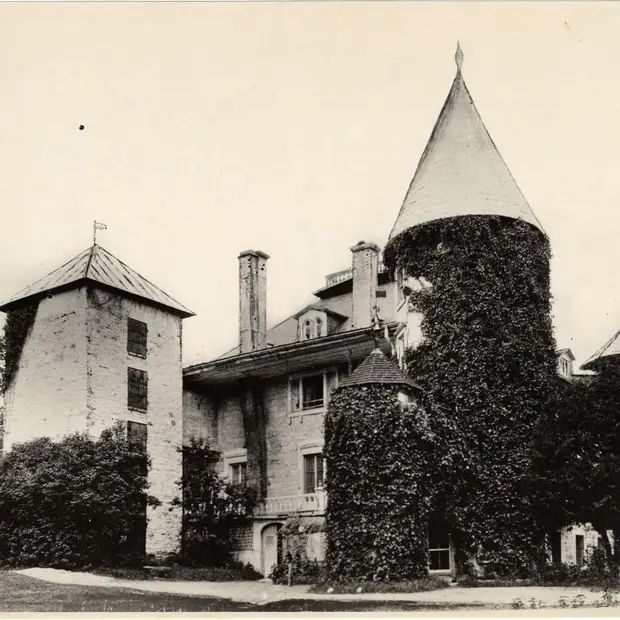
In 1817, Louis-Joseph Papineau bought the Petite-Nation seigneury from his father. Forced into exile in 1837 for political reasons, Papineau was granted an amnesty eight years later and returned home. He then undertook the construction of a manor house whose plans were designed by Papineau himself and drawn by the French architect Louis Aubertin. The construction of the manor house was completed in 1850. Perched on the promontory of Cape Bonsecours overlooking the Ottawa River, it comprises a main building, an annex and four towers.
In 1975, the manor house was designated a heritage building, and ten years later it was designated a National Historic Site of Canada. It is now open to the public, and visitors can tour part of the manor house and its outbuildings, as well as the family museum, the funeral chapel where six generations of the Papineau family are buried, and the tea house. As they walk along the wide 800-metre-long pathway through the forest visitors can imagine themselves back in the 19th century.
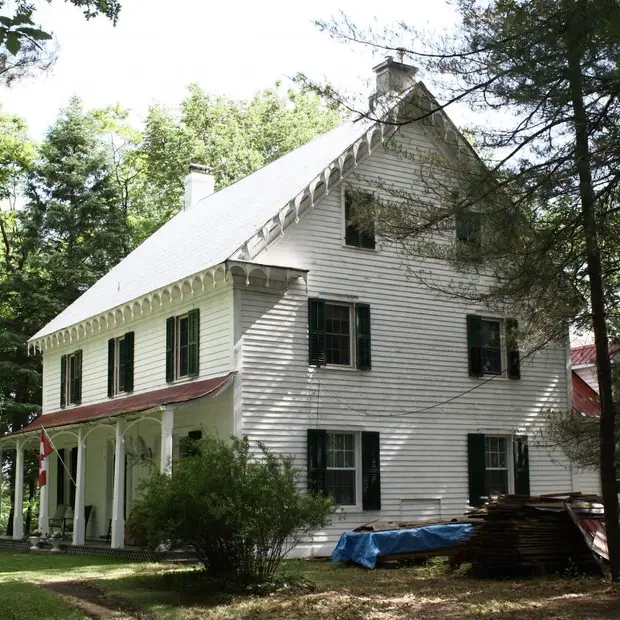
Originally from England, Walton Smith moved to Canada in the early 1840s and settled in the Pontiac, where he quickly became the assistant to John Egan, the owner of one of the region’s largest logging companies. After Egan’s death, Smith continued to operate his business for a time before striking out on his own. Actively involved in the development of the area, he served two terms as mayor of Onslow and was re-elected when it became the municipality of Quyon in 1875.
Around 1860, on a piece of land belonging to John Egan’s estate, Walton Smith built an imposing residence in the neoclassical style, made almost entirely of pine wood. It was three stories high, and the roof was decorated with wooden friezes. In 1873, the house was bought by William Mohr, the son of one of the first settlers in the area; it is still owned by that family today.
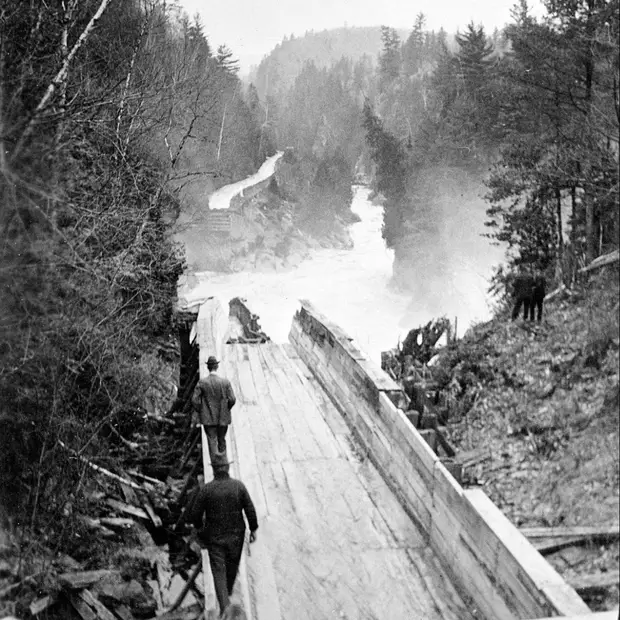
Chutes Coulonge Adventure Park stands on the former property of George Bryson, a mid-19th-century Pontiac logging magnate. He built a sawmill and a 915-metre-long log slide to bypass Coulonge Falls. The area is at the heart of the region's forestry and logging history.
In the 1990s, the Chutes Coulonge site was converted into a park. Visitors can take a self-guided tour following interpretation panels to discover an exhibit on period tools and techniques used in Bryson’s day. The park also offers activities such as a treetop obstacle course, ziplines over the Coulonge River, and a via ferrata circuit of over 600 metres. Chutes Coulonge Adventure Park invites visitors to learn about the site’s history through various outdoor activities.
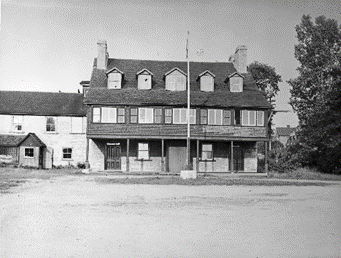
Standing on the banks of the Ottawa River and Lac Deschênes, the Symmes Inn is directly linked to the founding and development of Aylmer. Built in 1831 by Charles Symmes, Philemon Wright’s nephew, the inn allowed travellers from Montreal to rest before boarding a ship and continuing their journey northwest. For many years, the inn was the main stop on the region's transportation network.
During the 1880s, the inn's trade declined because of the expansion of rail travel, which was faster and more comfortable. The building was used for various purposes until 1975, when it was designated a historic monument. In 2003, the Aylmer Museum, then located in the John McLean House, moved into the old inn and was renamed the Symmes Inn Museum.
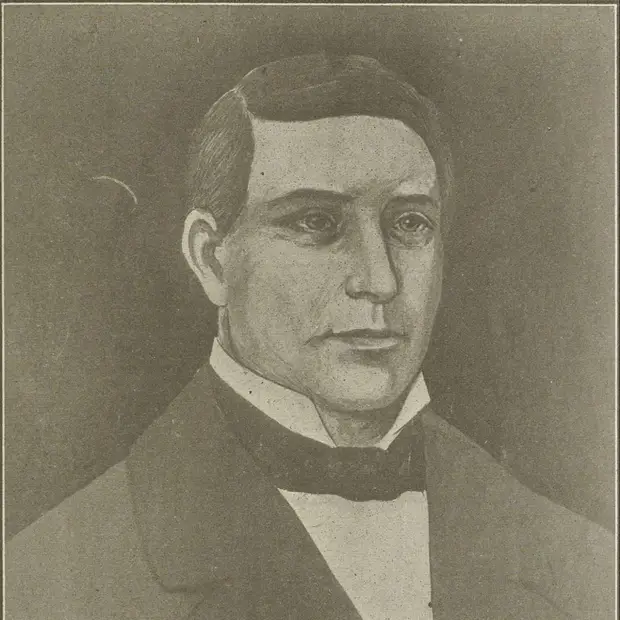
Joseph Montferrand dit Favre, better known as Jos Montferrand (sometimes anglicized as Big Joe Mufferaw), was born in Montreal in 1802. Drawn to the Outaouais to work in the forest industry, he worked as a lumberjack, log driver and foreman for various companies for nearly 30 years. Known for his strength and courage, he was a staunch defender of French Canadian workers’ rights. Whether true or exaggerated, there are many stories and legends about Jos Montferrand’s exploits. The Gatineau courthouse building bears his name, and in 1992, Canada Post honoured him with a commemorative stamp.
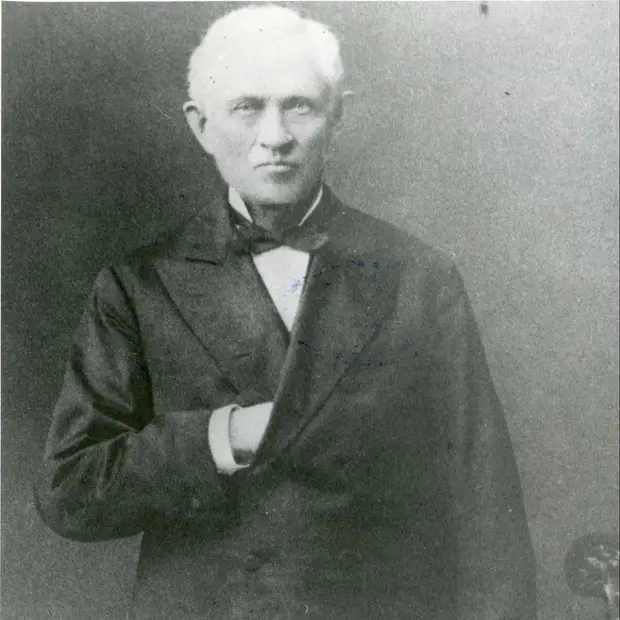
Born in 1818 in Glasgow, Scotland, James Maclaren immigrated to Canada with his family in 1822. They first settled in Torbolton Township, Ontario, then moved to Wakefield in the 1840s. Maclaren and his brother established the James Maclaren Company around 1850, and the business quickly grew to include a general store, a grist mill, a brickyard and a woollen mill. The successful entrepreneur also became involved in buying white-pine logs and timber, some of which he sold to the sawmills in Ottawa.
James Maclaren continued to expand his business, but Buckingham was the main seat of his activities. He was one of the city’s leading employers and played an important role in its development.
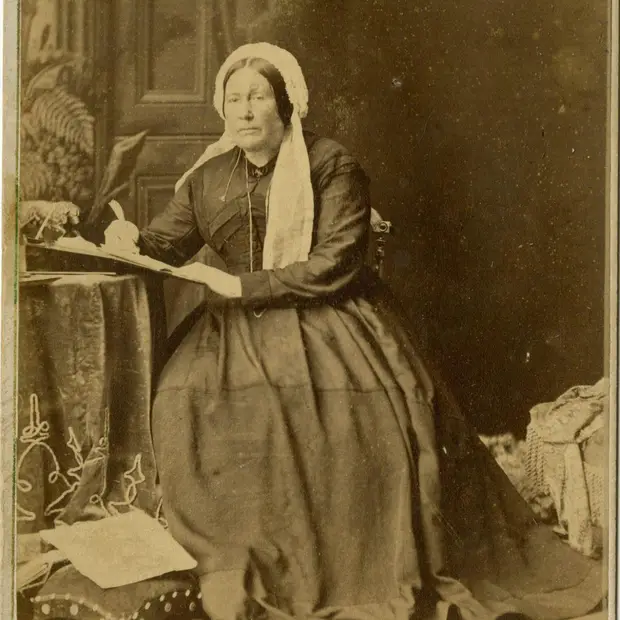
Born in 1816 into a prominent family active in farming and logging, Mary McConnell was one of the pioneer women of the Outaouais. In 1837, she married a prosperous merchant, Robert Conroy, with whom she settled in Aylmer. There, he built the British Hotel to accommodate travellers wishing to bypass Chaudière Falls. The couple also lived there with their ten children.
Involved in the development of Aylmer’s transportation services, Mary acquired the Deschênes Rapids farm in 1857 and transformed it into one of the largest dairy farms in the Outaouais. A born leader, she took over the family businesses in 1868, after her husband’s death. She modernized the various facilities, increased the number of sawmills, and employed nearly 200 workers. Thanks to her business acumen, she was recognized as a lumber baroness, a title rarely granted to a woman at the time.
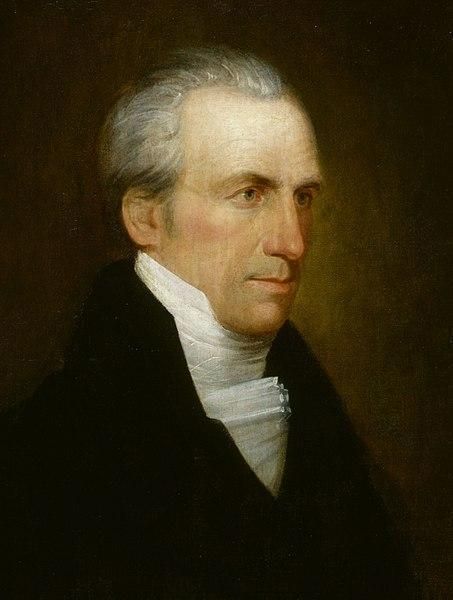
Philemon Wright was instrumental in the development of what would become the City of Hull in 1875. He was born in 1760 in the United States, into a farming family. In 1800, taking advantage of the opening of North America to American settlement, Wright set out for Hull Township with a few families and workers. His goal was to establish a self-sufficient agricultural colony. The group began building a village near Chaudière Falls, a village that later became known as Wright’s Town.
A true businessman, Wright quickly recognized the potential of the region’s forest industry. In 1806, he was the first to bring a raft of square timber to Quebec City to sell his cargo. In 1814, with his sons, he founded Philemon Wright and Sons to expand his business. He died in 1839.




© 2026 Outaouais Tourism. All rights reserved.